

The journey from a seated position to a stable stance is something most people take for granted. For individuals recovering from surgery, living with progressive muscle weakness, or managing chronic pain, that simple transition can feel like an insurmountable obstacle. An electric sit to stand lift changes this narrative entirely. It transforms a physically demanding, often risky, transfer into a smooth, controlled, and dignified movement. Unlike manual lifts that require significant exertion from a caregiver, or full-body sling lifts that can feel impersonal and restrictive, the electric sit to stand device leverages the patient's own weight-bearing ability. This hybrid approach fosters active participation in the transfer process, which is critical for maintaining muscle tone and joint flexibility. The electric motor does the heavy lifting of vertical motion, but the patient remains engaged, using their core and leg muscles to finalize the standing position.
The design philosophy centers on biomechanical alignment. The lift provides a stable base of support, with knee pads that prevent the patient from sliding forward and a padded chest harness that guides the upper body. When the electric mechanism activates, it lifts the patient at a natural angle, mimicking the body's own standing pattern. This reduces the shearing forces on the skin and the strain on the shoulders that can occur with improper manual lifting techniques. For the caregiver, the benefit is immediate and measurable. The risk of back injury from repeated bending and pulling drops dramatically. The electric sit to stand lift is not merely a tool; it is a collaborative partner in care, enabling a higher quality of life for both the person being lifted and the person performing the lift. It bridges the gap between complete dependence and functional autonomy.
How the Mechanism Works and Why It Matters for Rehabilitation
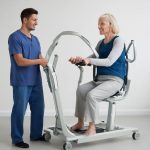
The core engineering of an electric sit to stand lift revolves around a precision linear actuator or a robust geared motor system. When you press the handheld control, the motor engages, driving a lifting arm upward. This arm is connected to a padded sling or a rigid back support that cradles the patient's back and hips. The patient's feet rest on a wide, non-slip platform, and their knees are stabilized by adjustable pads. The beauty of the system is that it does not yank the patient upright. Instead, it provides a steady, controlled ascent. Modern units offer variable speed control, allowing the caregiver to adjust the lift speed to the patient's comfort level, making the transfer less alarming for someone who might be anxious about losing balance.
In a rehabilitation context, this mechanism is invaluable. Physical therapists often use these devices to practice standing transfers safely. A patient who has lost confidence after a fall can be gently lifted to a standing position, hold that weight for a few seconds to stimulate muscle engagement, and then be lowered back down. This repetition, without the risk of a fall, builds neuromuscular pathways. The lift essentially downloads the correct movement pattern into the body. Moreover, the consistent support allows caregivers to focus on ensuring proper foot placement and posture rather than wrestling with the patient's weight. Choosing the right equipment for this process is critical. For heavy-duty or frequent use, many clinicians now recommend a specific model of electric sit to stand lift that features a wider wheelbase for stability and a higher weight capacity to accommodate bariatric needs without compromising maneuverability. This integration of smart engineering and therapeutic intent makes the device a cornerstone of modern physical rehabilitation programs, helping to shorten recovery times and reduce the risk of secondary complications like pneumonia or deep vein thrombosis that come from prolonged bed rest.
Practical Case Studies: Transforming Daily Care in Home and Facility Settings
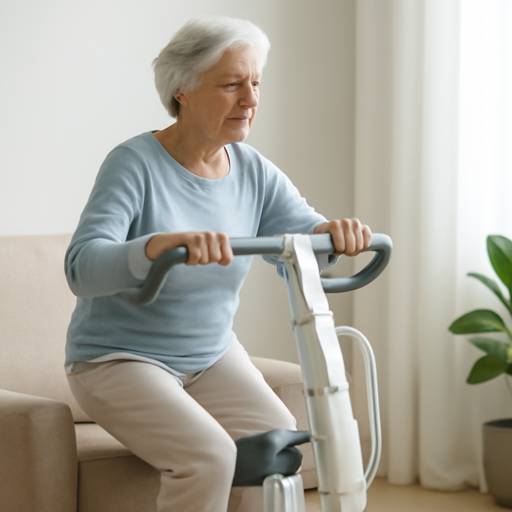
To understand the real-world impact, consider the case of a 78-year-old woman recovering from a hip replacement. She is ambulatory with a walker but cannot stand up from a low sofa or a standard toilet without significant assistance. Her adult daughter provides care but has a history of lower back pain. Before the lift, every bathroom trip required a tense negotiation involving the daughter bracing her back and the patient fearing a painful misstep. Introducing the electric sit to stand lift changed this dynamic completely. The patient could slide to the edge of the chair, place her feet on the lift platform, and the device lifted her to a stable standing position. The daughter merely guided the walker into place. This small change eliminated the daughter's back pain and gave the patient a sense of agency. She was no longer being pulled; she was being assisted. Her confidence soared, and her physical therapy progress accelerated because she was no longer afraid of the transfer.
In a skilled nursing facility, a different scenario played out. A 65-year-old man with multiple sclerosis was losing the ability to transfer independently. The staff was using a two-person manual assist, which was becoming increasingly unsafe for the staff and uncomfortable for the resident. The facility implemented electric sit to stand lifts in several rooms. The impact was immediate. The lift allowed a single caregiver to manage transfers that previously required two. But the more profound benefit was psychological. The resident, who had felt his independence slipping away, could now initiate the stand by holding the chest harness and pushing up slightly as the motor engaged. He was actively participating in his own care. The staff reported fewer shoulder injuries and a noticeable improvement in the resident's mood and engagement. The lift became a bridge to maintaining his dignity, allowing him to use a standard toilet rather than a bedpan or commode chair. This real-world application underscores that the device is not just about mechanics; it is about preserving personal identity and quality of life.
Key Sub-Topics: Selection and Safety Integration
Selecting the correct electric sit to stand lift involves evaluating several critical factors beyond simple weight capacity. The sling design is paramount. Some patients prefer a full back sling for maximum support, while others with good trunk control benefit from a smaller belt-style sling that allows for more natural movement. The chassis footprint matters for navigating doorways and bathrooms. A lift with a base that opens and closes via a foot pedal is practical for fitting around wheelchairs and chairs with fixed armrests. Battery life is another consideration, especially for facilities. Units with sealed lead-acid or lithium-ion batteries ensure the lift operates at full power for an entire shift, with an emergency manual lowering feature for power outages. The location of the control unit should be intuitive for the caregiver, often integrated into the push handles for easy thumb operation.
Safety integration is not just about the hardware; it is about the system of use. Facilities should train staff on weight shifting techniques to ensure the patient's center of gravity remains over the platform. Proper knee pad adjustment is critical; too low and the patient feels unstable, too high and it can cause discomfort. The lift should be used only with patients who can bear at least 50% of their weight on their own legs. For those who are non-weight bearing, a full-body sling lift is required. A practical tip from experienced users is to pre-position the lift at a slight angle to the bed or chair, rather than directly in front. This allows the patient to pivot naturally into the standing position. By combining careful equipment selection with rigorous safety protocols, the electric sit to stand lift becomes an extension of the caregiver's expertise, delivering safe, efficient, and respectful transfers every time.


 Eleni Papadopoulos