

For caregivers and healthcare practitioners, the daily challenge of transferring a patient from a seated to a standing position carries significant risk. Musculoskeletal injuries are a leading cause of attrition in nursing and home health care, often stemming from the repetitive strain of manual lifting. While manual techniques and basic floor lifts have served as standard tools, a more sophisticated solution has emerged to bridge the gap between full dependency and independent mobility. The electric sit to stand lift offers a distinct advantage: it leverages the patient’s own weight-bearing capacity while removing the dangerous torque and shear forces that plague traditional transfer methods. This piece of equipment is not merely a lifting device; it is a rehabilitation tool, a safety mechanism, and a dignity-preserving instrument that fundamentally changes how care is delivered.
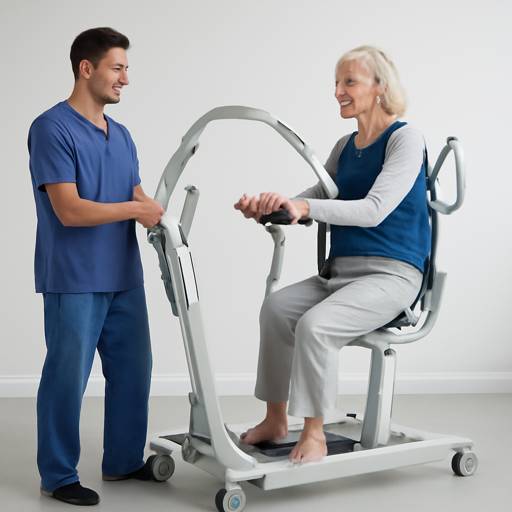
The core distinction between an electric sit to stand lift and a full-body sling lift lies in the mechanics of the transfer. A sling lift requires the patient to be completely passive, lifted vertically from a seated or lying position into the air. In contrast, a sit-to-stand lift is designed for patients who possess some lower body strength and the ability to bear weight on at least one leg. The device utilizes a padded knee support and a stable platform for the feet. As the lift is activated, the patient is gently pulled forward and upward into a standing posture. This natural motion is physiologically superior; it encourages muscle engagement, maintains joint range of motion, and reinforces the neurological pathways required for standing. For the caregiver, the electric motor does the heavy lifting, eliminating the need to pull the patient's weight manually. This directly reduces the compressive forces on the caregiver's lumbar spine, making daily tasks safer and more sustainable.
Beyond Mechanics: Patient Dignity and Clinical Outcomes
The clinical benefits of an electric sit to stand lift extend far beyond the prevention of caregiver back injuries. For the patient, the experience of being lifted mechanically can be disconcerting, even dehumanizing. A full-body sling lift, while necessary for some, strips the patient of agency. The sit-to-stand method, however, actively involves the patient in the process. The act of pushing through their legs to stand, even with assistance, fosters a sense of accomplishment and preserves neuromuscular function. This is particularly critical for geriatric patients or those recovering from hip or knee surgery, where prolonged inactivity leads to rapid muscle atrophy and joint stiffness.
From a clinical perspective, regular use of an electric model ensures that the transfer is smooth, controlled, and predictable. Unlike hydraulic models which require manual pumping that can be jerky or inconsistent, the electric drive provides a constant, steady motion. This predictability is vital for patients with fragile skin, as it prevents shearing and friction burns that can occur during a manual lift. Furthermore, the ability to stop the lift at any point mid-motion allows the caregiver to adjust the patient’s positioning or clothing, preventing discomfort and pressure points. The technology supports fall prevention as well. Because the patient is securely cradled between the knee pad and the sling, there is a very low risk of a sudden drop or loss of balance. The caregiver maintains control of the lift handle, guiding the patient's trajectory with minimal effort. To understand the full range of options and configurations available for different patient needs, exploring a dedicated electric sit to stand lift product line reveals how weight capacity, leg spread, and pad design can be tailored to specific care environments.
This active participation also has psychological benefits. Patients who are able to stand, even for a few moments each day, experience improved circulation, better bowel function, and reduced risk of pressure ulcers. The vertical posture aids lung expansion, reducing the likelihood of pneumonia. By facilitating frequent standing, the electric sit to stand lift becomes an integral part of a patient’s daily therapy, transforming a necessary transfer into a therapeutic intervention. The confidence gained from being able to stand with support can dramatically improve a patient’s outlook and their willingness to engage with rehabilitation programs.
Evaluating Key Features for Clinical Adoption
When selecting an electric sit to stand lift for a facility or home care environment, several critical features differentiate high-performing models from basic units. The foundation of safety lies in the stability of the base. Most modern units offer a power-adjustable leg spread. This feature allows the caregiver to widen the base while the patient is seated in a wheelchair or chair, sliding the lift feet under the chair, and then narrowing the base once the patient is standing for easier maneuvering through doorways. The electric operation of this leg spread is a significant upgrade over manual foot pedal adjustments, saving time and physical effort during each transfer.
The weight capacity of the unit is a non-negotiable factor. While many models support up to 400 pounds, bariatric or heavy-duty versions can accommodate up to 700 pounds or more. It is essential to select a lift that comfortably handles the patient’s current weight with a safety margin. The knee support pad design is another area of crucial differentiation. High-quality pads use high-density foam contoured to fit the natural shape of the shins and knees, distributing pressure evenly. Pads that are too narrow or hard can cause discomfort or restrict circulation, making transfers unpleasant for the patient. Some advanced models offer flip-up footplates, which allow the patient to stand directly on the floor or on a scale, integrating weight measurement into the transfer routine.
Battery life and charging systems are practical considerations that directly impact workflow. An electric sit to stand lift is typically powered by a rechargeable battery. Models with a digital battery indicator prevent the anxiety of a dying battery mid-transfer. Quick-charge systems that allow the lift to be plugged in while in use are ideal for facilities with high patient turnover. The design of the lifting sling is often overlooked, but it is the patient’s primary point of contact. Slings for sit-to-stand lifts are designed differently than full-body slings; they wrap around the patient’s back and under the arms, providing support without encasing the entire body. The material should be breathable, washable, and equipped with color-coded loops that correspond to different patient sizes, ensuring a secure and comfortable fit every time.
Real-World Applications: From Home Health to Long-Term Care
The versatility of the electric sit to stand lift makes it a valuable asset across a spectrum of care settings. In a home health environment, the lift empowers a single family caregiver to safely transfer a loved one who is post-operative or has progressive weakness. A case study involving an 82-year-old woman recovering from a hip replacement demonstrated that daily use of the lift allowed her to continue living at home safely. Her daughter, who previously struggled with manual transfers and was at high risk of injury, was able to perform the task four times a day without strain. The patient’s ability to bear weight gradually improved, and within six weeks, she was able to transition to using a walker with minimal assistance. The lift was not a crutch but a stepping stone to improved mobility.
In skilled nursing facilities, the lift serves a different but equally vital purpose. Here, staff must often handle multiple high-risk transfers per shift. Implementing a protocol for all sit-to-stand transfers using an electric device reduced staff injury claims by nearly 40% in one mid-sized facility over a 12-month period. Furthermore, the residents experienced fewer incidents of skin tears and bruises, which are common with manual techniques. The lift became the default tool for toileting, chair transfers, and repositioning, standardizing safety across all shifts. In rehabilitation units, therapists use the lift to perform gait training. The patient stands with the support of the lift, working on balance and stepping, while the therapist is free to focus on proper biomechanics rather than holding the patient’s weight. This allows for longer, more productive therapy sessions. The lift’s scale feature also allows therapists to track weight-bearing progress, providing objective data to guide rehabilitation plans.
Even in outpatient clinics, electric sit to stand lifts are used to assist patients who require examination or treatment on a standing X-ray machine or treatment table. The efficiency of the electric motor means that appointments run on schedule, and the patient does not spend unnecessary time in a transfer process. These real-world examples illustrate that the lift is not a one-size-fits-all device but a flexible tool that adapts to the unique demands of the patient and the caregiver, consistently delivering safer, more dignified outcomes.


 Eleni Papadopoulos