

At busy docks, every minute a trailer sits idle translates into higher costs and missed service windows. A telescopic belt conveyor brings the conveyor directly to the trailer floor, shrinking walking distances, stabilizing takt times, and making truck loading and unloading safer and faster. Purpose-built for parcel, e-commerce, retail replenishment, and industrial shipments, these extendable machines modernize the most labor-intensive step in material flow.
How Telescopic Belt Conveyors Work—and What Makes Them Different
A telescopic belt conveyor is an extendable, multi-stage boom equipped with a powered belt that carries parcels, cartons, bags, or totes between the dock and the farthest reaches of a trailer or container. Unlike fixed dock conveyors, the unit’s nested sections slide smoothly to reach deep inside 40-foot or 53-foot trailers, then retract for a compact footprint when not in use. The belt continuously moves product, eliminating repetitive carrying and the stop-start rhythm of manual chains.
Core components typically include a rigid base frame, one to four extending booms, a drive system with variable speed control, and an operator console with simple forward/reverse and extend/retract commands. Many models add height adjustment at the nose, allowing operators to align the discharge point with varying pallet stacks or floor levels. This fine control reduces product drops and helps maintain ergonomic lift zones between mid-thigh and chest height.
Advanced features elevate performance and safety. A split-nose or articulating front can angle up or down to match changing stack heights as a trailer fills. Photoelectric sensors, soft-start drives, and anti-collision logic protect both people and goods. Emergency-stop buttons, handrails, and clearly marked pinch points further support safe operation. For facilities handling mixed freight, reversible belts and quick-adjust side guides manage everything from polybags to heavy cartons. Where ambient conditions demand, sealed bearings, IP-rated controls, and temperature-tolerant components ensure reliability in hot, humid, dusty, or cold-chain environments.
Mobility options expand usage scenarios. Some sites prefer floor-mounted mobile units with steering tillers and casters to serve multiple doors. Others install pit-mounted or cantilevered designs for perfectly flush integration with the dock, preserving valuable aisle space. In high-volume hubs, a telescopic belt conveyor for truck loading unloading may connect to a sortation line or extend from a mezzanine feed—creating a direct, high-throughput bridge from receiving to putaway or from order fulfillment to outbound staging.
ROI, Throughput, and Ergonomics: Quantifying the Value at the Dock
The immediate win is throughput. By moving the conveyor rather than the worker, facilities lift pieces-per-labor-hour and compress trailer dwell time. Operators no longer walk 10–20 meters in and out of a trailer for each load cycle; instead, they focus on steady, low-exertion placement. This shift stabilizes the “takt” at the dock, improving predictability for upstream and downstream processes. In parcel and e-commerce hubs, teams often see substantial increases in carton flow per door during peak hours without adding headcount.
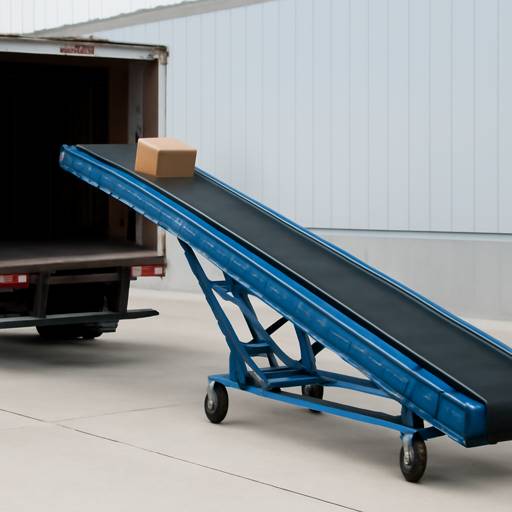
Ergonomics is the second pillar of value. A telescopic belt conveyor for truck loading unloading places goods within optimal lift ranges, reducing awkward bending, overreaching, and twisting. The ability to control belt speed and boom height lets each operator work at a sustainable pace. Fewer high-risk movements typically translate into lower recordable incidents and less fatigue over long shifts. In many operations, this ergonomic benefit directly supports staffing resilience and training outcomes, because new hires can ramp up faster when tasks are standardized and physically manageable.
Financially, the return on investment spans hard and soft savings. Tangible gains include reduced trailer turn times, lower demurrage, and improved door utilization—sometimes enough to defer capital spend on new dock doors. Indirect benefits add up too: steadier flow improves sorter utilization, tighter receiving cycles boost inventory accuracy, and predictable outbound loading curbs late-dispatch penalties. With energy-efficient drives and smart motor controls, power costs remain modest relative to the labor savings and velocity impact.
Consider typical scenarios. In cross-border logistics where container unloading can be erratic, extendable conveyors smooth inbound variability: as the boom retracts with the load height, flow remains consistent until the last meter. In express parcel terminals, synchronous loading and unloading across multiple doors keeps sortation lines fed at a near-constant rate. For industrial shippers handling heavier cartons, reinforced belts, powered elevation, and controlled infeed speed protect products and packaging integrity. Across each case, the unifying theme is reliability at the dock—turning a former bottleneck into a lever for network performance.
Selecting the Right Conveyor for Your Operation: Features, Options, and Implementation Tips
Specifying the optimal unit starts with geometry. Match boom stroke to the deepest trailer lengths you receive; ensure adequate overlap so the nose reaches the last pallet position without compromising operator stance. Belt width should fit your typical carton footprint with margin for skew, while dynamic load ratings must align with your heaviest items and target throughput. If you handle both parcels and bulkier cases, choose belts and side guides that accommodate size variability without frequent tool changes.
Speed control and reversibility are essential for truck loading and unloading in mixed workflows. Variable frequency drives allow smooth acceleration to protect fragile items, while rapid reverse clears jams safely. Consider a hydraulic or electric articulating nose for stacked or palletized loads; this keeps discharge height consistent as stacks grow. Where docks see temperature swings or contaminants like dust, specify hardened components and proven sealing. Safety should be layered: light curtains or presence sensors near the nose, intuitive e-stops, audible/visual alerts when booms move, and non-slip platforms for manned operation if your process calls for it.
Integration matters. Tie conveyor PLCs into WMS or WCS where possible for start/stop logic, lane assignment, and device health monitoring. Barcode readers, handheld scanners, or weigh-in-motion modules at the infeed capture data early, improving tracking and carton auditability. For facilities scaling automation, ensure the conveyor can dock to existing lines or future sorters via standardized mechanical and electrical interfaces. Preventive maintenance plans should include quick-change wear parts, accessible lubrication points, and clear diagnostic codes—downtime at the dock cascades quickly across an operation.
Implementation tips complete the picture. Validate dock height, trailer mix, and floor flatness before installation; confirm power and network drops at each door; and conduct dry runs with your heaviest SKUs. Build a training program that covers safe operation, boom positioning, and basic troubleshooting. Finally, choose a partner with deep R&D in logistics equipment and a track record across express delivery, warehousing, cross-border logistics, and industrial load/unload environments. For product exploration and configuration options, review a telescopic belt conveyor for truck loading unloading designed for modern, data-driven dock operations—prioritizing throughput, ergonomics, and long-term reliability.



 Eleni Papadopoulos